Many assume that they can no longer correct teeth misalignment and bite issues because they’re too old. This is not true. As long as teeth and gums are healthy, age doesn’t matter.
This blog covers all key aspects of braces for adults. If you’re over 30 and worry that orthodontic treatments can’t help you, keep reading.
Can Adults Get Braces at Any Age?
The short answer is yes. At any age, anyone can get braces as long as their teeth and gums are healthy. Although braces for adults are less popular than Invisalign, your orthodontist may determine that your case is complex enough that traditional braces are the better option.
In general, orthodontic treatment is not limited by age. We even have patients who visit us in their 50s to straighten their teeth for a better appearance and improved function.
Benefits of Braces for Adults
Braces help move your teeth into the proper position and enhance the appearance of your smile. As a result, it can significantly improve how you look. It also corrects bite issues, making teeth easier to clean. This translates into a lower risk of gum disease and tooth decay. Moreover, right alignment reduces jaw strain, uneven tooth wear, and long-term dental complications.
Read more: “Top 10 Benefits of Orthodontic Treatment for Your Oral Health”
Factors That Determine Candidacy
Are braces suitable for your specific case? The orthodontist considers the following key factors when deciding:
- Overall gum health
- Strong and stable bone support around the teeth
- The severity level of misalignment or bite problems
- Presence of missing teeth or dental restorations
- The patient’s oral hygiene habits and whether they can maintain care during treatment
- General dental condition (if any cavities or infections must be addressed first)
Thinking About a Smile Makeover?
At Leslie North Dental, we offer personalized cosmetic consultations to help you choose the right treatments for your smile enhancement.
Book a consultation today! Your dream smile is just a call away.
Common Dental Problems Braces for Adults Can Correct
If you’re dealing with one or more of these issues, braces can help you:
Crooked Teeth and Crowding
When teeth overlap or don’t have enough space to function properly, they become harder to clean. This increases the risk of plaque buildup, cavities, and gum disease. With braces, teeth gradually shift into proper alignment, improving both appearance and overall oral hygiene, as well as bite function.
Gaps Between Teeth
Braces for adults can address gaps between teeth and affect both appearance and function. Once this issue is corrected, food trapping becomes less likely. Moreover, uneven pressure during chewing is reduced.
Simply put, braces help close the space by moving teeth into their correct position. This is how orthodontic treatments improve symmetry and support better long-term oral health by reducing areas where plaque can easily build up.
Bite Problems Such as Overbite, Underbite, and Crossbite
When upper and lower teeth don’t align properly, bite problems occur. This affects how the jaws align during chewing and speaking. Overbite, underbite, and crossbite may lead to uneven tooth wear, jaw discomfort, and even constant headaches over time. Braces move teeth into the proper position. As a result, they can fix bite issues and enhance function.
Types of Braces for Adults
Apart from clear aligners, braces come in three main types: traditional metal braces, ceramic braces, and lingual braces. Look at this table to understand their differences and each one’s pros and cons:
| Type of Braces | What It Is | Pros | Cons |
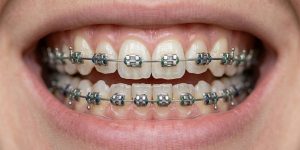
| Traditional metal braces | Metal brackets and wires fixed to the front of the teeth | Highly effective for all types of cases, including complex misalignment; usually the most affordable option; reliable and precise results | Most visible option; may cause initial discomfort; requires dietary restrictions and careful cleaning |
| Ceramic braces | Tooth-coloured or clear brackets placed on the front of teeth | Less noticeable than metal braces; effective for moderate to complex cases; popular among adults who want a discreet option without aligners | More fragile than metal braces; can stain if not cared for properly; usually slightly more expensive |
| Lingual braces | Braces attached to the back (inner side) of teeth | Completely hidden from view; works for complex orthodontic issues; fixed system so no compliance issues | Harder to clean and adjust to; can affect speech initially; typically the most expensive option and may feel less comfortable at first |
Read more: “What Are the Best Alternatives to Braces for a Straighter Smile?”
Braces Are Still an Appropriate Choice for Adults
Using braces for adults is nothing out of the ordinary. People of all ages can undergo different orthodontic treatments if their teeth and gums are healthy enough. It’s understandable that adults may prefer Invisalign because of its discreet look. But it’s the orthodontist who must inspect your teeth and determine which method suits you best.
Along with the patient following the treatment plan, the orthodontist’s experience also plays an important role in achieving optimal results. If you’re in Newmarket and looking for an experienced team to treat teeth misalignment, our orthodontists at Leslie North Dental are ready to plan a customized treatment plan for you. Contact us today to schedule a visit.
FAQ
Is it too late to get braces in your 30s, 40s, or 50s?
No, it is not too late to get braces at any of these ages. Adult orthodontic treatment is common, and many patients start even later in life. As long as your teeth and gums are healthy, age is not a limiting factor.
How long do braces for adults take?
Treatment usually takes between 12 to 36 months, depending on the complexity of the case. Mild alignment issues may be corrected faster, while bite problems or severe crowding take longer. Your orthodontist will give a more accurate timeline after an assessment.
Do braces hurt more for adults?
Braces do not necessarily hurt more for adults, but initial discomfort can feel more noticeable due to fully developed bone structure. Most patients experience mild soreness after adjustments, which usually fades within a few days. Over-the-counter pain relief and soft foods typically help manage this phase.
Will I need to wear a retainer after treatment?
Yes, retainers are necessary after braces to maintain the new tooth position. Without them, teeth can gradually shift back over time. Your orthodontist will recommend a specific wearing schedule based on your case.
Have you considered braces as an adult, or are you still unsure if they’re the right option for you? Share your questions, concerns, or personal experiences in the comments below.