

A gap left by a missing tooth affects both your appearance and oral function. Dental bridges and implants are two recommended options to address this issue, and each may be suitable for some patients.
In this blog, you will read a comprehensive comparison of dental implants vs bridges and find out which option may be right for you.
What Are Dental Implants?
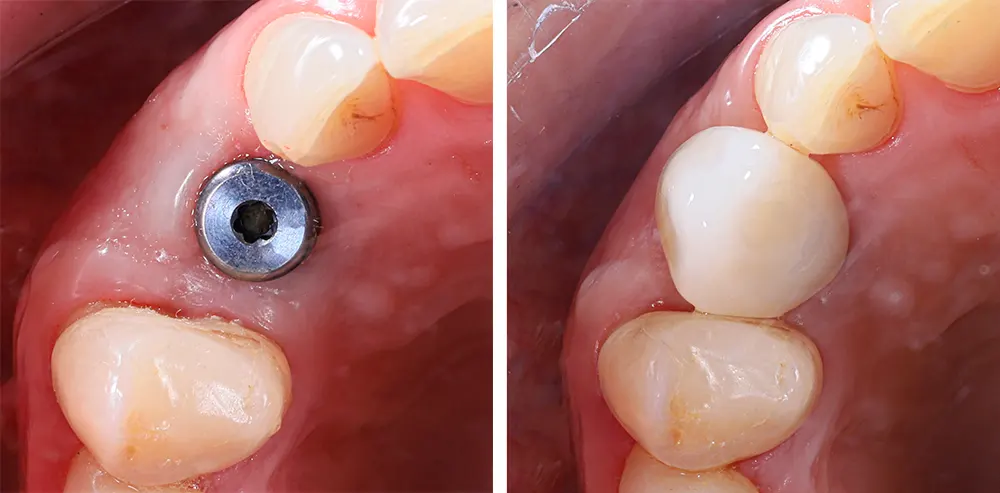
Dental implants are artificial tooth roots made of biocompatible materials, usually titanium. Dentists use implants to replace missing teeth. They surgically place them into the jawbone to provide a stable foundation for a replacement tooth.
Read more: “Types of Dental Implants: Everything You Need to Know”
What Are Dental Bridges?
Similar to implants, dentists use dental bridges to replace one or more missing teeth. Bridges are fixed dental restorations that use an artificial tooth, called a pontic. A pontic is positioned between crowns placed on nearby teeth.
Bridges do not replace the missing tooth root, unlike dental implants. Instead, they rely on neighbouring teeth for support and can restore chewing ability and the patient’s appearance.

Now, let’s look at a comprehensive comparison of dental implants vs bridges.
Dental Implants vs Bridges: Key Differences
This table summarizes key differences between dental bridges and implants:
| Aspect | Dental Implant | Dental Bridge |
| Procedure | Surgical procedure involving a titanium post placed into the jawbone. | Non-surgical procedure using crowns placed on adjacent teeth. |
| Treatment Time | Approximately 3 to 6 months, including healing | Usually completed in 2 to 3 weeks |
| Durability | 15+ years and can often last a lifetime with proper care | Typically lasts 5 to 7 years and may need replacement |
| Upfront Cost | Usually higher | Usually lower |
| Impact on Adjacent Teeth | Does not affect neighbouring teeth; healthy teeth remain untouched | Requires reshaping adjacent teeth to support crowns |
| Bone Health | Helps preserve jawbone and prevent bone deterioration by replacing the tooth root | Does not replace the tooth root and cannot prevent bone loss |
| Maintenance | Requires regular cleaning and dental checkups | Requires regular care with extra attention to prevent decay under crowns |
| Candidacy | Requires healthy jawbone and good overall oral health | Suitable for many patients, including some with bone loss |
Pros and Cons of Dental Implants
After going through a dental implants vs bridges comparison, let’s learn about their pros and cons:
Dental Implants Pros
Dental implants can be the ideal solution for eligible candidates because they offer several benefits:
- They can last more than 15 years, and may even last a lifetime with proper care.
- They closely resemble natural teeth. Furthermore, they can mimic the function of a natural tooth.
- Dental implants replace the tooth root, thereby helping prevent bone deterioration after tooth loss.
- They leave surrounding teeth unchanged and do not require reshaping them.
- If properly placed, dental implants have a high success rate compared to alternative methods.
Dental Implants Cons
These are dental implant risks:
- They usually have a higher upfront cost compared to bridges.
- Dental implants require surgery for placement, which may cause anxiety for some patients.
- This treatment can take 3 to 6 months, which is longer than bridges.
- Patients need sufficient bone support to be good candidates for dental implants.
- Beyond bone support, dentists assess certain medical conditions or health issues. This means that treatment is not suitable for everyone.
We Can Help with Replacing Your Missing Tooth
At Leslie North Dental, we offer both implants and bridges, based on your specific needs.
Schedule an appointment and let our dentists evaluate your condition to help you understand which option is right for you.
Pros and Cons of Dental Bridges
Like implants, dental bridges have their own advantages and disadvantages.
Dental Bridges Pros
The main benefits of dental bridges include:
- They are a more budget-friendly option compared to implants, which usually have a higher upfront cost.
- Most bridges can be completed in 2 or 3 appointments over a few weeks.
- They do not need oral surgery or a lengthy recovery period.
- Even patients with low bone density can be candidates for bridges. Unlike dental implants, bridges may be suitable for many patients.
- A single bridge can restore multiple teeth in a row.
Dental Bridges Cons
Be aware of these potential drawbacks if you are considering dental bridges:
- Bridges have a shorter lifespan than implants. They ideally last around 7 years and typically require replacement much sooner than implants.
- Dentists must reshape supporting teeth to hold the crowns. This can impact otherwise healthy teeth.
- If not properly maintained, dental bridges can increase the risk of decay and gum problems in the supporting teeth.
- As explained, they do not replace the tooth root. As a result, they cannot prevent bone loss after tooth loss, unlike dental implants.
How to Choose Between Dental Implants vs Bridges
You must consider various factors such as your oral health and budget when choosing the best option after comparing dental implants vs bridges.
If you want a durable solution that preserves your jawbone health and also provides a more natural-looking result, dental implants are better, as explained above. On the other hand, if you need a quicker, more affordable treatment, or if you lack enough bone support for implants, we suggest that you use dental bridges.
In summary, these factors can help you decide between these two options:
- Number of missing teeth: Dental implants are usually best for replacing a single missing tooth, while bridges can cover multiple consecutive missing teeth.
- Overall health: You may be limited to one option under certain conditions, such as uncontrolled diabetes or healing problems.
- Treatment cost: As discussed, bridges have a lower upfront cost. So, if you’re on a tight budget, it is likely your best option, since dental implants are more expensive.
- Longevity: If you want to avoid replacements in a short period, choose dental implants only if your dentist approves your candidacy. Implants last much longer than bridges.
- Bone health: To get implants, you need to have sufficient bone density. Otherwise, it’s usually best to replace your missing teeth with dental bridges.
Ultimately, a professional dentist must evaluate your condition and recommend the most suitable option based on your needs.
Get Expert Help Choosing Dental Implants vs Bridges
In this blog, we provided a detailed comparison of dental implants vs bridges to help you learn more about your options for replacing missing teeth. As you’ve seen, although both treatments serve a similar purpose, they differ in many ways. Keep in mind that while you can share your preferences with your dentist, the final decision should be based on your dentist’s professional assessment.
The dental team’s experience plays an important role in achieving optimal results with either bridges or implants. If you are in Newmarket and looking for skilled dentists to take care of your needs, our team at Leslie North Dental can help. Contact us today and schedule a visit for an assessment by our dentists.
FAQ
Is it better to get an implant or a bridge?
It depends on your needs. Implants are better for long-term durability and bone health. Bridges are better for a faster, more affordable solution.
What lasts longer, a bridge or an implant?
Dental implants can last 15 years or more, often a lifetime. Bridges typically last 5 to 7 years before needing replacement.
Can I switch from a bridge to an implant?
In many cases, yes. Your dentist will evaluate your jawbone health and determine if an implant is a viable option after a bridge.
Do dental bridges look natural?
Yes. Modern bridges are made from porcelain or ceramic materials that closely match the colour and shape of your natural teeth. However, implants are usually more natural than bridges.
Not sure whether dental implants or bridges are the best option for you? Leave your questions in the comments below, and our dental team will answer them.